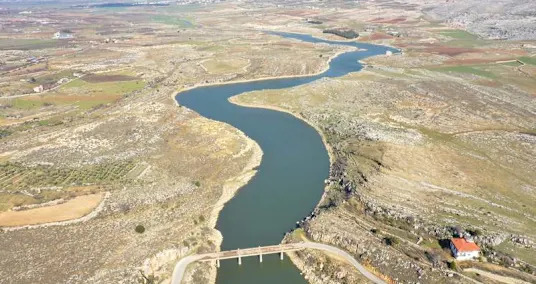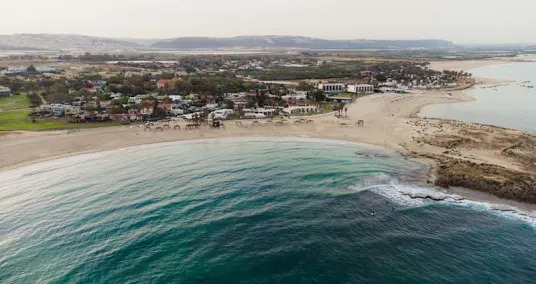
The discovery was made in an ancient shipwreck in the Dor Lagoon near the Carmel Coast, where archaeologists recovered nine pieces of unprocessed iron known as “blooms.”
Researchers from the University of Haifa said Wednesday that an underwater excavation off Israel’s northern Mediterranean coast uncovered what they described as the earliest known cargo of raw iron transported by ship, dating back around 2,600 years, Xinhua reported.
The discovery was made in an ancient shipwreck in the Dor Lagoon near the Carmel Coast, where archaeologists recovered nine pieces of unprocessed iron known as “blooms.” According to the university, the find provides direct evidence of how iron was transported in its earliest commercial stages.
The material was preserved in its original form, having solidified directly in a smelting furnace without undergoing forging or further refinement. Researchers said this distinguishes the cargo from later iron artifacts that typically show signs of shaping or tool-making.
Unlike copper and bronze, which could be melted into liquid form in ancient production processes, iron was heated with charcoal to produce a solid, porous mass. That mass was generally hammered to remove impurities and create denser material suitable for tools and implements.
The recovered blooms showed no indication of that secondary processing stage, suggesting they were transported immediately after production.

Earliest iron shipment discovered in ancient Mediterranean wreck
To determine the age and condition of the cargo, researchers conducted microscopic and chemical analyses.
Radiocarbon dating was also carried out on charred wood embedded in one of the pieces, helping confirm the timeline of the shipment. The findings were published in the journal Heritage Science.
Researchers said the cargo indicates that iron was being moved in raw form from production sites to other locations for further processing, pointing to a level of specialization in ancient manufacturing and trade networks in the Mediterranean.
The University of Haifa said the discovery provides new insight into early iron production and distribution practices in the region.
LATEST POSTS
- 1
 From Representative to Business visionary: Private issue Victories
- 2IDF kills senior PIJ Gaza City Brigade cmdr. who infiltrated Kibbutz Nahal Oz on Oct. 7
- 3Why home maintenance deserves a spot in the annual health and budget plans
- 4Top Fascinating Organic products: Which One Might You Want to Attempt?
- 5Putting pig organs in people is OK in the US, but growing human organs in pigs is not – why is that?


- MacArthur Foundation awards $100M to outbreak surveillance network, a boost amid global health cuts
- Massive supernova explosion may have created a binary black hole
- Keep It Cool: Uncovering Famous Fridge Brands for Each Home
- Israel has clear objectives south of Litani River, but will face difficult choices further north
- 'We are ready': NASA still on track to launch Artemis 2 astronauts to the moon April 1
- Bavarian leader questions Germany's Eurovision participation
- Wedding Guest Outraged That Bride and Groom, Who Are in Their 60s and Have Both Been Married Before, Registered for Gifts
- Figure out How to Track and Anticipate Future Cd Rates
- Rights groups condemn Israel Police decision to ban Sudan Genocide protests nationwide