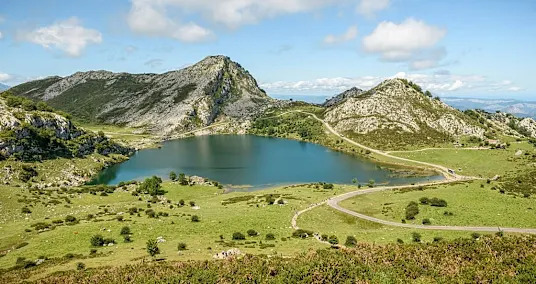
Tucked between Spain’s northern coast and its rugged interior, the Picos de Europa National Park has just been named the most beautiful place in the world by Time Out.
The ranking, based on votes from travel experts and writers, puts this dramatic mountain range ahead of some of the world’s most photographed destinations. But for many travellers, it is still relatively under the radar.
Stretching across Asturias, Cantabria and Castile and León, the park is defined by sharp limestone peaks, deep gorges and alpine lakes.
Carved into three distinct massifs by rivers, it offers a landscape that feels both vast and surprisingly accessible.
Time Out’s Ed Cunningham described the Picos as a “marvel of geography” which makes for “scenes of extraordinary beauty”.
One of Spain’s most famous walks
A key attraction in the park is the Ruta del Cares, often described as one of Spain’s most spectacular hiking trails.
The path cuts through the Cares Gorge, following a narrow route carved into the rock face with sheer drops and panoramic views along the way.
According to Tripadvisor, the park’s terrain and river valleys have shaped some of the country’s most iconic walking routes, attracting both experienced hikers and casual visitors.
For something less demanding, the Covadonga Lakes offer an easier way to take in the scenery.
These glacial lakes sit high in the mountains and are among the most photographed spots in northern Spain.

Cable cars, villages and local food
Not all of the park needs to be explored on foot. The Fuente Dé cable car lifts visitors more than 750 metres in just a few minutes, opening up sweeping views of the surrounding peaks without a long climb.
At lower altitudes, traditional villages such as Potes provide a base for exploring. Narrow streets, stone houses and small local restaurants give a sense of everyday life in the region.
Food is also part of the experience here. The area is known for hearty mountain dishes and strong cheeses like Cabrales, which is aged in nearby caves and has a distinctive flavour shaped by the local climate.
Wildlife and quiet escapes
Despite its growing recognition, Picos de Europa still offers a sense of quiet.
Visitors may spot chamois climbing steep slopes or birds of prey circling above the valleys.
The size of the park means it is possible to move away from busier viewpoints and find quieter trails, particularly outside peak summer months.
The park is accessible from cities such as Santander and Oviedo, both within a couple of hours by car.
Public transport options exist, but driving makes it easier to reach more remote areas.
Spring and early autumn are often considered the best times to visit, with milder temperatures and fewer crowds.
Summer brings clearer skies but also more visitors, especially around key sites like the Covadonga Lakes.
LATEST POSTS
- 1
 Artemis 2 captures historic 'Earthset' photo | Space photo of the day for April 7, 2026
 - 2Farmers call for French blockades over cow disease cull
- 3Which Diet Prompts the Incomparable Wellbeing Results?
- 4From candy cane fishing to ornament switcharoo, here are some of the best games you can play with your loved ones this holiday season
- 5Ariana Grande says Eternal Sunshine 2026 tour will be her last for a 'long, long time': 'One last hurrah'


- How to watch 'A Charlie Brown Christmas' for free in 2025
- Remote Headphones: Upgrade Your Sound Insight
- Instructions to Comprehend and Use Open Record Extra Offers
- Vote in favor of the wide open action that revives your brain and soul!
- The most effective method to Really Adjust Hypothesis and Practice in Your Brain science Studies
- At least 18 Palestinians killed in latest clashes in Gaza
- Al-Sharaa denies he called for 80% of Syrians to return from Germany
- 5 Eating routine Well disposed Snacks to Keep You Fulfilled
- Ancient mass grave discovered in water cistern during Tel Azekah excavations