When you buy through links on our articles, Future and its syndication partners may earn a commission.

SpaceX launched two more batches of Starlink satellites today (Dec. 17), in a pair of launches from both U.S. coasts.
First up was a Falcon 9 rocket carrying 29 of the broadband internet relay units (Group 6-99) into low Earth orbit from Launch Complex 39A at NASA's Kennedy Space Center in Florida. The satellites were successfully deployed about an hour and five minutes after the 8:42 a.m. EST (1342 GMT) liftoff on Wednesday.
"Deployment of 29 Starlink satellites confirmed," SpaceX reported on social media.

The Florida flight's first stage booster (B1094) completed its sixth flight, landing on the "Just Read the Instructions" droneship stationed in the Atlantic Ocean.
Then came 27 more Starlink satellites (Group 15-13), riding atop a Falcon 9 rocket launched from Space Launch Complex 4 East (SLC-4E) from Vandenberg Space Force Base in California. Lifting off at 10:27 a.m. EST (1527 GMT or 7:27 a.m. PST local time), the mission was on track to deploy its payload about an hour after leaving the ground.
The California flight's first stage booster (B1063) performed its 30th propulsive landing, touching down on the droneship "Of Course I Still Love You" in the Pacific Ocean.
The California flight's first stage booster (B1063) performed its 30th propulsive landing, touching down on the droneship "Of Course I Still Love You" in the Pacific Ocean.
The 56 (in total) Starlink satellites launched on Wednesday add to SpaceX's megaconstellation, which now numbers more than 9,400 units in orbit. The network provides access to the internet to areas around the globe where other options for connectivity is sparse, as well as enables in-flight wifi and cell-to-satellite service on select carries.
Wednesday's dual launches were SpaceX's 164th and 165th Falcon 9 flight of the year.
LATEST POSTS
- 1
 Plans for ‘stop anywhere’ night buses recommended by government for women’s safety
 - 2Banks for High Fixed Store Rates: Augment Your Investment funds
- 3Flash flooding causes highways to close to and from Eilat
- 4Find the Insider facts of Viable Advertising: Building a Positive Brand Picture
- 5Congo declares its latest Ebola outbreak over, after 43 deaths



- A Sweet Choice: Pick Your #1 Cake!
- Palestinians tell BBC they were sexually abused in Israeli prisons
- Newly discovered link between traumatic brain injury in children and epigenetic changes could help personalize treatment for recovering kids
- Individual Preparation Administrations to Raise Your Wellness Process
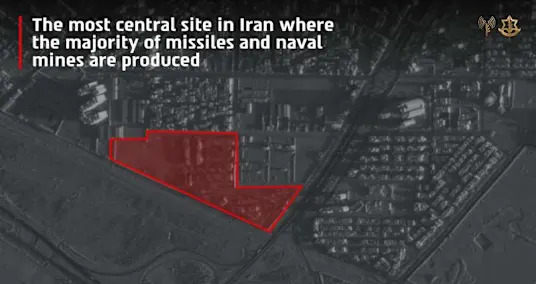
- IDF destroys regime's missile, sea mine production site in Yazd amid nationwide airstrikes
- How does spider venom damage human cells? Researchers uncover the killer mechanism of recluse spider toxin
- More parents refusing vitamin K shots for newborns, study finds
- 5 VIPs That Changed Style
- Chinese construction workers in Israel: 'I’d rather be bombed than live in poverty'