The Israeli military has carried out a new round of air strikes in southern Lebanon, less than a day after Israel and Lebanon held their first direct talks in decades.
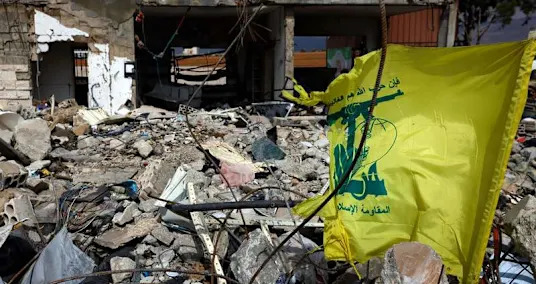
Residents of the towns of Mjadel, Baraachit, Jbaa and Mahrouna were told to evacuate areas around locations that the Israeli military alleged were weapons warehouses belonging to the Iranian-backed group. No casualties have been reported.
An Israeli military spokesman said the sites constituted a ceasefire violation and warned that it would continue to operate "to remove any threat" to Israel.
Israel has carried out near-daily strikes on Lebanon since a ceasefire took effect in November 2024, following 13 months of conflict.
There was no immediate comment from Lebanon's leaders to Thursday's strikes. Lebanese politicians have previously condemned similar strikes as ceasefire violations.
Under the first phase of a deal brokered by the US and France, Israeli troops were to withdraw from southern Lebanon, while Hezbollah was to remove its fighters and weapons from south of the Litani river, about 30km (20 miles) from the border with Israel - a plan the group and its allies oppose.
Israel has maintained positions at several strategic border sites and stepped up its air strikes in recent weeks. It is an escalation officials say is driven by Hezbollah's attempts to rebuild its military infrastructure and what they see as limited Lebanese government efforts to disarm the group.
Thursday's strikes came less than 24 hours after Israel and Lebanon sent civilian envoys to the Lebanese border town of Naqoura for their first direct talks in decades.
The talks, hosted at the headquarters of the UN peacekeeping mission, Unifil, took place during a meeting of the ceasefire monitoring committee, which until now had only included military officers from the US, France, Lebanon, Israel and Unifil.
Israeli Prime Minister Benjamin Netanyahu's office issued a statement saying the meeting "took place in a good atmosphere" and that it "was agreed that ideas would be formulated to advance possible economic cooperation between Israel and Lebanon".
It also said that Israeli envoys "clarified that the disarmament of Hezbollah is obligatory, regardless of the advancement of economic co-operation".
Lebanese Prime Minister Nawaf Salam was more cautious, saying Lebanon remained "far" from diplomatic normalisation with Israel and that the talks were focused on "defusing tension".
"We are not yet at peace talks," he told reporters, saying Lebanon's priorities were the cessation of hostilities, the release of Lebanese detainees held by Israel, and Israel's full withdrawal from its territory.
He added that Beirut was open to the deployment of French and US troops to help verify efforts to disarm Hezbollah.
The latest strikes and diplomatic moves coincide with a visit by a UN Security Council delegation to Lebanon to review the stalled implementation of the ceasefire.
LATEST POSTS
- 1
 Netflix's 'Lord of the Flies' show blends 'Adolescence' and 'Yellowjackets'
 - 2Blood pressure drug recalled for possible cross-contamination
- 3An Aide On Upgrading Your FICO rating
- 4France honors the victims of the Paris attacks' night of terror 10 years on
- 5Israel launches new wave of attacks against Hezbollah in Beirut



- This Week In Space podcast: Episode 189 — Privatizing Orbit
- Nikki Glaser has been testing out Golden Globes jokes. There's one nobody wants to hear
- Elanco's drug gets emergency nod to treat deadly flesh-eating parasite in cats
- Concern for couple jailed in Tehran as British embassy closes
- From Dread to Certainty: Individual Accounts of Strengthening
- the 6 Shrewd Beds for seniors: A Complete Survey
- Getting Your Youngsters' Future: Grasping Legacy Regulations
- 35 million tons of food go to waste yearly in the US. Experts share tips to help stop it
- The gay hockey show no one saw coming — and everyone is suddenly obsessed with