HOUSTON (AP) — The Artemis II astronauts are now forever intertwined with Apollo 8.
A day after the historic lunar flyaround, NASA on Tuesday released striking new photos taken by the U.S.-Canadian crew.
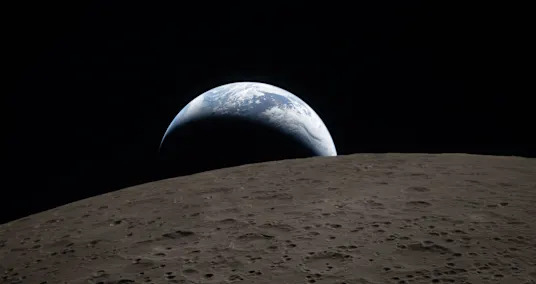
The four astronauts channeled Apollo 8’s famous Earthrise shot from 1968 with their own: Earthset, showing our planet setting behind the gray, pockmarked moon. Another photo captures the total solar eclipse that occurred when the moon blocked the sun from the crew’s perspective.
The three Americans and one Canadian are now headed home, with a splashdown in the Pacific set for Friday. In the meantime, scientists at Houston's Mission Control are poring over the stream of moon photos beaming down.
Apollo 8's three astronauts became the world's first lunar visitors, orbiting the moon on Christmas Eve 1968. Their Earthrise shot became a symbol of the modern-day environmental movement.
Artemis II marks NASA's first return to the moon with astronauts — a critical step toward a lunar landing by another crew in two years.
___
The Associated Press Health and Science Department receives support from the Howard Hughes Medical Institute’s Department of Science Education and the Robert Wood Johnson Foundation. The AP is solely responsible for all content.
LATEST POSTS
- 1
 The most effective method to Oversee Unsold SUVs in the Car Business
 - 2What's changing about healthcare in 2026 — Medicare, Medicaid, ACA, premiums, and enrollment deadlines
- 3Investigating Design and Individual Style: Track down Your Remarkable Look
- 4Instructions to Choose the Best Material Organization for a Fruitful Rooftop Substitution
- 5Machado ‘presented’ her Nobel Peace Prize medal to Trump


- UN chief warns he could refer Israel to ICJ over laws targetting UNRWA
- Top Pastry: What's Your Sweet Treat of Decision?
- Top Fascinating Organic products: Which One Might You Want to Attempt?
- Individual Preparation Administrations to Raise Your Wellness Process
- Step by step instructions to Get the Best Vehicle Rent Arrangement: Insider Tips and Systems
- Exploring Programming Greatness: A Survey of \Easy to use Connection points\
- Can humans have babies in space? It may be harder than expected
- Winter storms blanket the East, while the U.S. West is wondering: Where’s the snow?
- Foods with healthy-sounding buzzwords could be hiding added sugar in plain sight