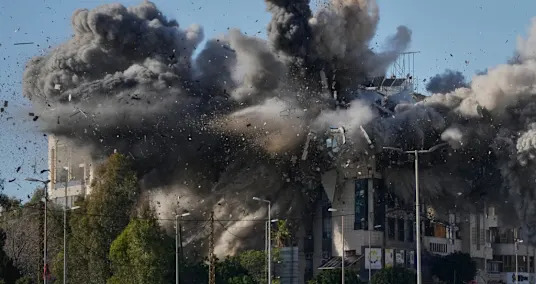
The US-Israel war on Iran and its ripple effect throughout the Middle East have had a devastating impact on Arab countries, with millions expected to slide into poverty, according to the United Nations.
A UN Development Programme (UNDP) report published on Tuesday said that gross domestic product (GDP) in the region was estimated to decline by approximately 3.7 to 6 percent after a month of war, equivalent to a contraction of $120bn to $194bn.
Abdallah Al Dardari, UN assistant secretary-general and director of the UNDP Regional Bureau for Arab States, said that 3.7 million jobs will be lost and about four million more people in the region could fall below the poverty line, noting that the war had highlighted the “fragility in the Arab economy”.
The report was based on projections of “a short but intense conflict lasting for four weeks”, signalling that the impact of the war, which has seen Iran attacking Gulf energy infrastructure and squeezing oil and gas exports through the Strait of Hormuz, will likely be even higher if it drags on longer.
Issued as tight oil supplies pushed Brent crude futures up 4.7 percent to more than $118 per barrel, the report said, “risks in strategic maritime corridors” had “knock‐on effects on inflation, trade flows, and global supply chains” that could undermine livelihoods in the Middle East’s “interconnected economies”.
It added that increases in poverty rates were “concentrated in the Levant and fragile countries (Sudan and Yemen), where baseline vulnerability is highest and shocks translate more strongly into welfare losses”.
The report noted that Lebanon, dragged into the war after Hezbollah struck Israel in retaliation for the US-Israeli killing of Iran’s Supreme Leader Ayatollah Ali Khamenei on February 28, is especially impacted, with “ongoing air strikes and evacuation orders … already causing widespread destruction of residential areas, transport infrastructure, and public services, alongside large‐scale displacement”.
“We hope the fighting will stop tomorrow, as every day of delay has negative repercussions on the global economy,” said Al Dardari.
LATEST POSTS
- 1
 China's Normal Ponders: A Visual Excursion
 - 2Kobe Bryant called this WNBA star the 'Gold Mamba.' She turned his advice to her into a tattoo.
- 3Israel approves 19 new West Bank settlements in major annexation push
- 4WHO suspends Gaza medical evacuations after contractor killed by Israeli troops
- 5America's Confided in Fridge in 2024



- Flourishing in a Cutthroat Work Market: Vocation Methodologies
- Oprah Winfrey's Favorite Wellness Destination Is A Luxurious Italian Retreat
- Ancient mass grave discovered in water cistern during Tel Azekah excavations
- Holiday spots Well known With Americans In 2024
- Vote In favor of Your Number one Savvy Beds
- Images of Bangladeshi motorcyclists sleeping at petrol pumps are AI-generated
- Pfizer in $41.5 million settlement with Texas over ADHD drug for children
- Investigate Something else for Less: Financial plan Travel Objections
- Must-See Attractions in Washington, D.C.