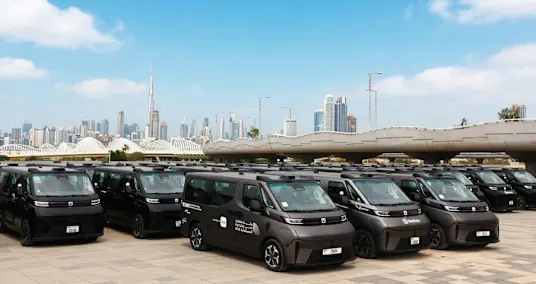
The dream of driverless taxis continues in the Gulf, where the conflict with Iran has slowed but not stopped progress on autonomous transport in Abu Dhabi, Dubai, and Riyadh.
Uber and WeRide added another driverless route in Saudi’s capital this week, linking shopping centers Hayat Mall and Riyadh Gallery. The expanded service comes after the vehicles completed more than 1,700 trips in a trial phase, according to the regulator.
Uber and WeRide have also launched fully driverless services in Dubai, beginning in popular residential and commercial areas Jumeirah and Umm Suqeim, with no safety monitor on board. Separately, Dubai Taxi Company plans to deploy more than 1,000 driverless cars in the city with Baidu’s Apollo Go, starting with a fleet of 50 this year. Earlier this month, Autogo, part of Abu Dhabi-backed technology company K2, began offering rides on Yas Island, and it plans to expand to Saadiyat and Al Maryah islands.
All this is bad news for the region’s taxi drivers, a largely South Asian group whose business is already down due to the conflict with Iran.
LATEST POSTS
- 1
 Israel launches new wave of attacks against Hezbollah in Beirut
 - 2How does spider venom damage human cells? Researchers uncover the killer mechanism of recluse spider toxin
- 3Holiday travel: Best days to hit the road as 110 million Americans expected to drive over Christmas and New Year's
- 4Study casts doubt on potential for life on Jupiter's moon Europa
- 5Whale stranded off Germany for days free again



- Americans generally like wolves − except when we’re reminded of our politics
- 6 Famous kind of practice on the planet
- Israel Police arrest twenty-one as anti-war protests grow despite broad support for Iran war
- Hamas delegation meets Egypt’s spy chief amid mutual ceasefire violation claims
- Astronaut on ISS captures spectacular orbital video of zodiacal light, auroras and the Pleiades
- How to watch the last supermoon of the year
- NASA's Voyager 1 set to achieve historic distance from Earth
- Top Pastry: What's Your Sweet Treat of Decision?
- What’s the shadowy organisation taking Gaza Palestinians to South Africa?