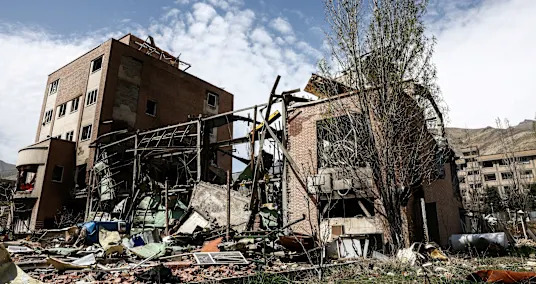
In Tehran, a city of nine million people, schools are closed, businesses are shuttered or struggling, and locals are living without a functioning air-raid warning system or public shelters. In many areas, the first sign of an incoming strike is the explosion itself.
There have been twice as many US and Israeli attacks on Iran compared to the number of Iranian retaliatory strikes since the war began — and the numbers killed in Iran have been orders of magnitude greater than in the neighboring Gulf states. A nationwide internet blackout, now entering its second month, has left civilians unable to access information about safety, shelter, and food and has meant some are unable to work. But while millions have fled Iran’s cities, many more are staying where they are. Some residents are hoping the US and Israeli bombs will cause the regime to collapse; others are left wondering if they are at risk if their neighbors are targeted.
For the many Iranians with ties to Dubai, there are other pressures, with Iranian nationals now barred from entering or transiting through the UAE. Residency permits, even for those with long-term Golden Visas, are reportedly being revoked without notice.

LATEST POSTS
- 1
 2026 Golden Globes: How to watch, start time, TV channel, full nominee list and more
 - 2If evolution is real, then why isn’t it happening now? An anthropologist explains that humans actually are still evolving
- 3I was about to film a movie with Glen Powell when my hair started falling out in clumps. Alopecia has made me unrecognizable as an actor.
- 4What will the Artemis 2 astronauts eat during their historic moon mission? (video)
- 5Vaccine committee votes to scrap universal hepatitis B shots for newborns despite outcry from children’s health experts




- Slims down for Maintainable Weight reduction
- As tetanus vaccination rates decline, doctors worry about rising case numbers
- Paul Feig loves a plot twist. Why not reboot 'Die Hard' starring a woman?
- Investigate Something else for Less: Financial plan Travel Objections
- Building a Flourishing Business: Illustrations from Business people
- Figure out how to Put resources into Lab Precious stones: A Novice's Aide
- Mom finds out she has cancer after noticing something was off while breastfeeding
- IDF confirms Iranian missile fragments hit near Kirya, multiple cars ablaze in Ramat Gan
- Empathy and reasoning aren’t rivals – new research shows they work together to drive people to help more